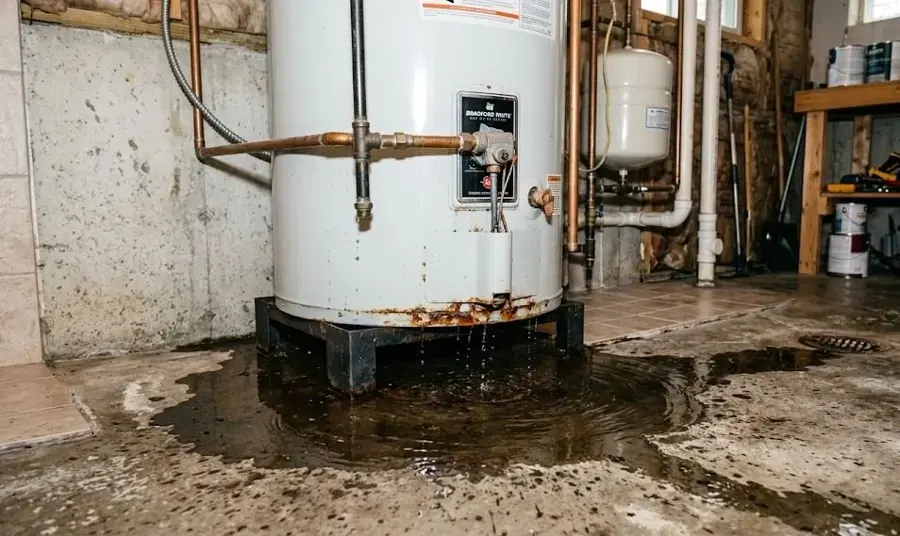
In many Germantown homes the water heater sits in the basement, a few steps from a finished family room, a washer or a wall of stored boxes. When the tank leaks, the water has a short trip to things that matter, and this post covers what to do and what the cleanup involves.
Key takeaways
- Most Germantown single family homes and townhomes sit over a basement, and many are finished, so a leaking tank often sits beside carpet and drywall.
- Shut off the water supply to the tank and the power or gas feeding it, then keep people out of the wet area.
- Extraction comes first, because carpet, pad, drywall and storage wick water up fast.
- A leaking tank is replaced and not repaired, so the cleanup and the plumber's replacement are two separate jobs.
- Drying ends with moisture readings, not with a floor that only feels dry.
Why basement tanks matter in Germantown
Germantown is a planned corridor city along I-270, and most of its homes were built from the late 1970s to the 2000s. Many are townhouses and garden condos, and most single family homes and townhomes sit over a basement.
Basement water heaters and washers often sit beside finished rooms. That puts the most vulnerable materials within reach of one failed tank.
The same pattern shows up in Germantown Town Center and Neelsville, where homes of different ages share the same basic layout.
A leak in a basement closet can run unseen behind a door. By the time the damp smell or the wet carpet shows up, the water may have been spreading for a long time.
How a tank leak starts
A tank leak rarely begins with a burst. It usually starts small, and then something gives.
Age is a factor but not the only one. Tanks that are installed poorly, or that sit in damp spaces, can fail early.
Rust and corrosion
Steel tanks corrode from the inside over time. When the metal gives way, water escapes at the bottom or a seam.
Failed fittings and valves
Connections at the top and the relief valve can drip or fail. A slow drip can soak a floor for days before anyone sees it.
- Rust streaks on the tank or the pipes.
- Dampness or a puddle at the base.
- Water stains on the nearest wall or ceiling below.
First steps when the tank leaks
Act on the water supply first. Then protect people and belongings.
The order below keeps the damage from growing.
If the hot water has stopped working and the floor is wet, treat it as a leak until proven otherwise.
- Close the cold water shutoff on the pipe feeding the tank.
- Turn off the electric breaker or the gas to the heater, if it is safe to reach.
- Stay out of standing water near outlets or appliances.
- Move boxes, rugs and furniture out of the wet area.
- Photograph the tank, the floor and anything damaged.
What gets wet beside a finished room
Water spreads outward in a thin film, and thin films reach a lot of material. Carpet and pad drink it first, then the bottom of the drywall, then the framing behind.
Cardboard boxes, cabinet bases and particleboard shelves swell and usually cannot be saved.
If the washer sits beside the heater, its hoses and the floor beneath it are part of the same wet area.
Basements are also where a family stores the things it cannot replace easily, such as photographs, documents and keepsakes. Lift those out first.
- Carpet and pad take water within moments of contact.
- Drywall wicks upward from the floor.
- Stored boxes and wood furniture soak and swell.
- Baseboards and trim trap water against the wall.
Extraction comes first
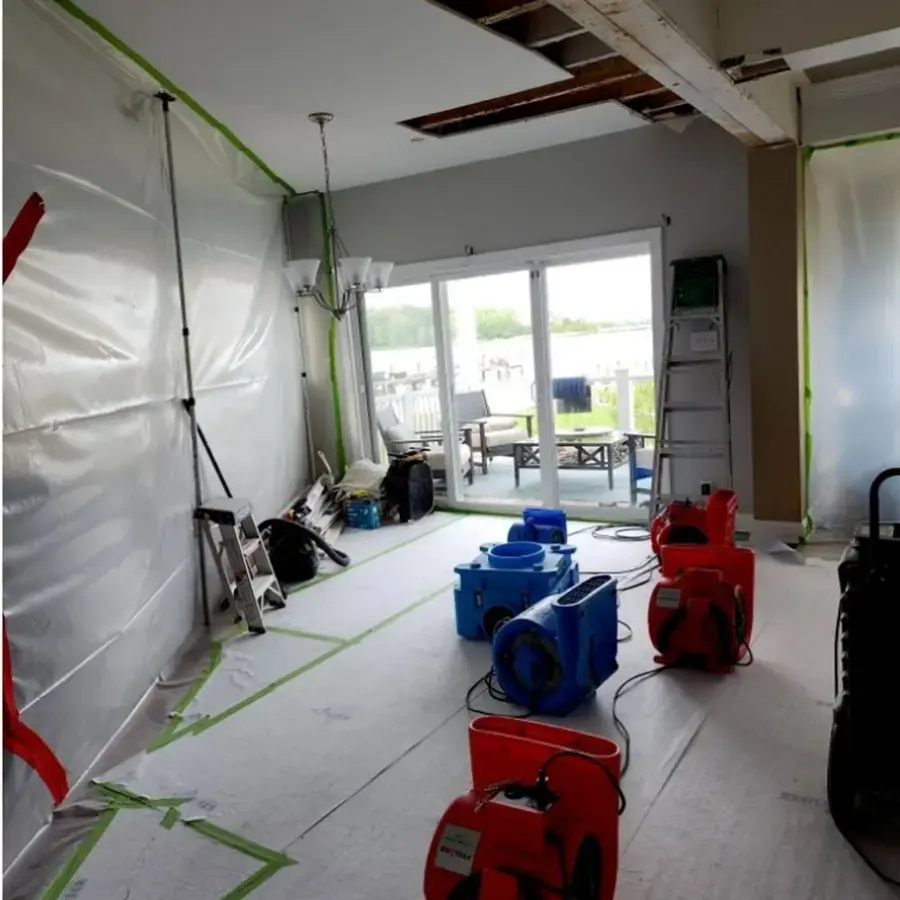
The first step of water heater leak cleanup is getting the water out. Truck mounted and portable extractors pull it from carpet, pad and hard floors.
Extraction matters more than it looks. Every gallon taken out is a gallon the dehumidifiers do not have to handle.
Water from a tank is usually clean at the start, which lets the crew save more material when the work begins early. Delay changes that.
The crew checks the washer area and the nearest wall during extraction, since water often reaches them along the floor.
Why timing matters
Wet drywall and pad begin to break down as water sits in them. Early extraction keeps more of the room intact.
Drying the room to readings
After the water is out, air movers and dehumidifiers dry what is left. Water extraction and drying are one job in two stages.
Moisture meters and a thermal camera show water inside walls that looks dry. The crew cuts into drywall only where readings call for it.
The room is finished when readings return to normal across the floor, the wall and the framing. Documenting those readings supports the insurance claim.
Insurance adjusters ask for evidence. Photographs, readings and a clear timeline of when the leak was found all help.
- Standing water is extracted.
- Pad and damaged drywall come out where readings call for it.
- Air movers and dehumidifiers dry the rest.
- Final readings are recorded.
Replacing the tank and preventing a repeat
A leaking tank is replaced and not repaired. A plumber handles the replacement, and the restoration team handles the water damage.
Do both promptly so the new tank does not sit beside a wet wall. See structural drying for how wet framing and subfloor are dried after the leak.
A final point about timing: do not wait for the hot water to stop before checking the tank. A damp spot at the base is enough reason to look closely.
- Look at the tank and valves for rust and drips a few times a year.
- Keep stored items off the floor near the heater.
- Know where the shutoff is before an emergency.
Questions
What should I do first when my basement water heater leaks?
Close the cold water shutoff to the tank and turn off the power or gas feeding it if it is safe. Then keep people away from standing water and call a restoration team.
Can a leaking water heater tank be repaired?
A tank that leaks is replaced and not repaired. A plumber replaces it while the restoration team removes the water and dries the damage.
Why does the water spread so far from the tank?
Water spreads in a thin film across the floor and wicks into carpet, pad and the bottom of the drywall, so a small leak reaches a large area.
Is water from a tank dirty?
Water from a tank is usually clean at the start. Acting early lets the crew dry more materials in place instead of removing them.
How is the basement dried after the water is out?
Air movers and dehumidifiers run until moisture meters show readings back to normal in the floor, walls and framing.
Can a washer beside the water heater make the damage worse?
It can. Washer hoses and the floor beneath it sit in the same wet area, so they are checked and dried along with the heater closet.