Structural Drying and Dehumidification in Germantown, MD
24/7 structural drying in Germantown. The drying team sizes LGR dehumidifiers and air movers to each room, reads the framing, subfloor and walls every day and pulls equipment only when the readings say dry.
(888) 535-8182Need the house dried right? Call now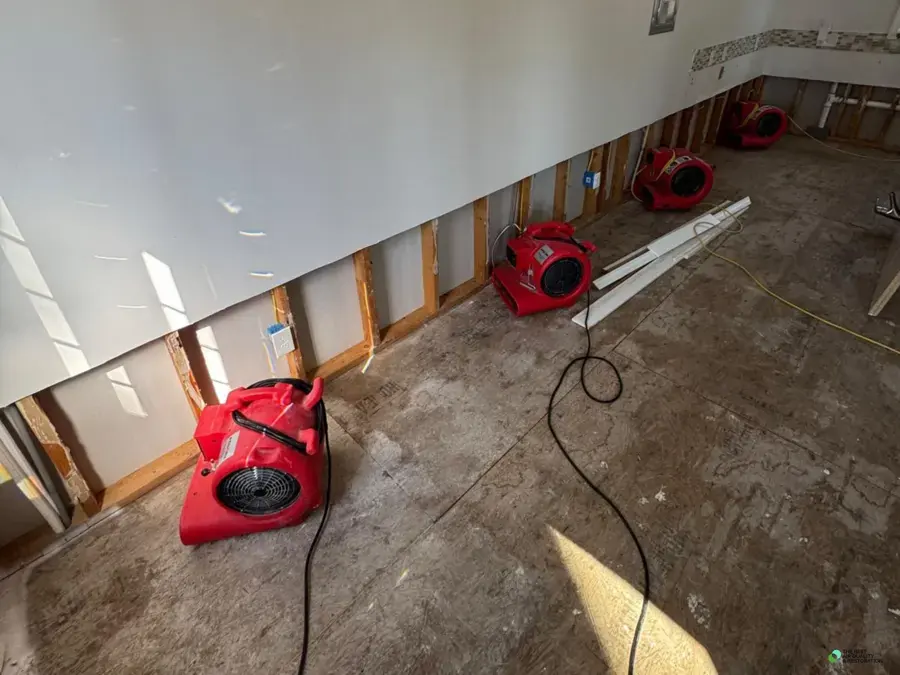
First steps for structural drying and dehumidification in Germantown
- 1
Leave the equipment running
Do not switch off air movers or dehumidifiers, even at night; drying stalls when they stop.
- 2
Keep the space closed
Keep windows and doors closed so the dehumidifiers control the air, especially in humid weather.
- 3
Set the thermostat steady
Keep the house at a normal temperature; warmth helps drying, extreme heat does not.
- 4
Do not close walls early
Do not reinstall baseboards, flooring or drywall until the readings confirm dry.
How structural drying and dehumidification is handled in Germantown
Structural drying is the phase after the water is out: drying the framing, subfloor, drywall, cabinets and concrete that soaked it up. Surfaces feel dry in a day. The wood and concrete inside the walls and floors do not, and if they are closed up wet they warp, smell and feed mold growth. Structural drying, not just surface drying, is what the IICRC S500 standard requires.
Before a single fan goes down, the tech who does the walkthrough takes readings in the wet room and the rooms around it, so the drying plan matches what is actually wet. The drying team pulls equipment on readings, not on how a wall looks.
What does structural drying and dehumidification cost in Germantown, MD?
Structural drying in Germantown typically runs $1,500 to $6,000 for the drying phase, billed mostly by equipment days and monitoring visits.
One or two rooms
Finished basement or floor
Class 4, hardwood or block
Ranges are typical, not a quote: category of water, square footage, material class and how fast drying started move the number most. Run the Germantown water damage cost calculator for a closer range.
The structural drying and dehumidification process, start to dry
- 1
Set the dry goal
A dry reference reading sets the target for every wet material.
- 2
Place equipment
Air movers and dehumidifiers are sized to each room's class of loss.
- 3
Monitor daily
Materials, temperature and humidity are read and logged every day.
- 4
Confirm and remove
Equipment comes out when readings match the dry reference.
How the drying team sets up
Every room gets a plan based on the class of loss, which describes how much water and what kind of materials are involved.
- Air movers set to the room's evaporation load, aimed along wet walls and floors
- LGR dehumidifiers that keep pulling water from the air even as it gets drier
- Desiccant dehumidifiers for Class 4 materials such as hardwood, block and concrete
- Injection and cavity drying for cabinets, wall cavities and ceilings
- Drying mats for hardwood floors that cupped
Readings decide when it is dry
The drying team takes a reading on a dry reference material, the same material in an unaffected room, and reads every wet material against it each day. Temperature and humidity are logged too, in a psychrometric log that shows the dehumidifiers are working. Equipment comes out when the wet materials read within 2 to 4 points of the dry reference.
Germantown basements add a challenge: cool below-grade air, block walls and humid summers. The team keeps the space closed so the dehumidifiers control the air. The EPA indoor air quality pages explain why moisture control matters inside a home, and University of Maryland Extension publishes home moisture guidance for the state's climate.
Cost of structural drying
Drying is billed mostly by equipment days: each air mover and dehumidifier per day, plus monitoring visits. A typical Germantown loss runs $1,500 to $6,000 for the drying phase; the water damage cost calculator gives a closer range, and the drying time estimator shows a typical window.
Trade fact: An LGR dehumidifier keeps removing water at lower humidity levels than a standard unit, which is what finishes the last stage of drying.
Structural drying and dehumidification across Germantown and upper Montgomery County
The Germantown restoration crew covers ZIP 20874, 20875 and 20876, from Germantown Town Center and Kingsview Village out through Clopper's Mill, Gunners Lake, Middlebrook, Neelsville and Milestone.
Nearby coverage reaches Gaithersburg, Boyds, Clarksburg, Darnestown, Montgomery Village, Poolesville, Rockville, Mount Airy, Herndon.
Related water damage services in Germantown
Structural Drying and Dehumidification questions in Germantown, MD
Why can't the equipment leave when the floor feels dry?
Surfaces dry first. The bottom plates, subfloor and concrete stay wet inside for days. Readings show when they are actually dry.
How long does structural drying take?
Most losses dry in three to five days. Basements, hardwood and Class 4 materials can take a week or more.
Why is it so loud and warm?
Air movers move a lot of air and dehumidifiers give off heat as they work. Both are part of how drying speeds up.
What is a dry reference reading?
A reading on the same material in an unaffected room. Wet materials are dry when they read within 2 to 4 points of it.
Can I open the windows to help?
In humid Maryland weather, usually not. Outside air adds moisture; the team keeps the house closed so the dehumidifiers work.
Is drying covered by insurance?
When the water loss is covered, the drying phase is usually part of the covered mitigation. Check with your own insurer.
Still dealing with it?
Still damp days later? Dispatch runs 24/7 in Germantown.
Need a Germantown home dried to a reading?
Equipment sized to every room and readings logged daily until the structure is dry.
(888) 535-8182Put drying equipment to work