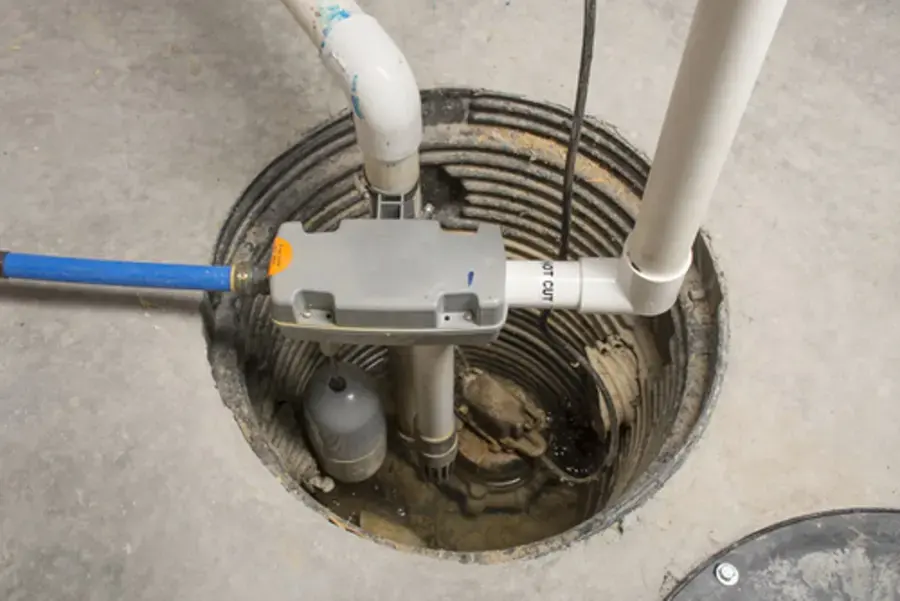
In Germantown, a sump pump does its hardest work in the wettest weeks of spring, and the moment it stops is the moment a finished basement begins to take on water. This post explains why the soil makes the job so heavy, how pumps fail, and what the cleanup does once the pit has overflowed.
Key takeaways
- Clay rich Piedmont soil holds water against foundation walls, so a Germantown sump pump runs hard in spring and has little room for error.
- Most pump failures come from lost power, a stuck float or a pit that simply cannot keep up with the rain.
- When the pit overflows, shut off power to wet outlets only if it is safe, then call for extraction before carpet and drywall wick the water up.
- Finished basements in townhouses and single family homes hold the most at risk, so drying is checked with moisture readings and not by feel.
- A pump check before the wet season is cheaper than a cleanup after it.
Why Germantown sump pumps work so hard
Germantown grew as a planned corridor city along I-270, and most of its homes were built from the late 1970s to the 2000s. Most single family homes and townhomes sit over a basement, and many of those basements are finished.
The ground under them is clay rich Piedmont soil. Clay drains slowly, so rain soaks in, sits against the foundation wall and looks for a way inside.
That is why a sump pit exists. The pump pulls the water out and sends it away from the house before it can rise to the slab.
Spring is the stress test. Weeks of rain leave the soil full, and then a summer style cloudburst or the remnants of a tropical storm arrives on top of it.
A home over a finished basement has more to lose than one with bare concrete below. Carpet, framing, built in cabinets and a bathroom or media room can all sit within reach of the same pit.
Neighborhoods such as Clopper's Mill, Kingsview Village and Middlebrook share that basic pattern, so the advice here applies across Germantown.
- Great Seneca Creek and Little Seneca Creek drain the area, and Gunners Lake and Clopper Lake sit among its neighborhoods.
- Tropical remnants such as Agnes in 1972 and Ida in September 2021 are the kind of rain that tests every pump.
- Garden condos and townhouses often put the lowest level and its finishes within reach of the same water.
How a sump pump fails in a storm
A pump seldom fails on a dry day. It fails when the work is hardest, which is exactly when the water arrives.
None of these failures announces itself in advance. The pump looks fine until the day it is needed.
Power loss
Storms knock out power. A pump with no electricity and no battery backup stops moving water, and the pit fills at the pace of the rain.
A stuck float or a worn motor
The float tells the pump when to start. If it jams against the pit wall or the switch wears out, the pump sits idle while the water climbs.
Pumps that sit for dry months can also fail the first time they are asked to run hard.
A pit that cannot keep up
Sometimes the pump is working and the rain is simply faster. A discharge pipe that is frozen, clogged or aimed back toward the foundation sends the same water around again.
- Check that the discharge pipe is clear and runs well away from the house.
- Look for a float that moves freely and a pit clear of silt and gravel.
- Confirm the pump is plugged into an outlet that still has power.
What to do when the pit overflows
Once water is on the floor, the clock matters more than the cause. Carpet, pad and drywall start wicking moisture upward from the slab.
These steps protect people first and belongings second.
Do not wade into deep water to restart a pump. A stuck pump is a job for someone who can work with the power off.
If the water is only an inch or two deep and away from electrical items, extraction can begin right away.
- Stay out of the basement if water is near outlets, a panel or an appliance, and have power to that area shut off by someone who can do it safely.
- Lift boxes, furniture legs and anything valuable out of the water.
- Photograph the pit, the pump and the wet rooms before anything is moved.
- Call a restoration team for sump pump failure water damage while the cause is still fresh and the water is still shallow.
What the water reaches in a finished basement
A finished basement is a set of layers, and water moves through every one of them. The carpet and pad take the first hit, then the bottom of the drywall, then the framing behind it.
Storage near the walls soaks next. Cabinets and furniture with particleboard bases swell and rarely recover.
Because Germantown has so many finished lower levels, the crew treats the whole room as a system. Visible water is only the start of the job.
Seen from above, a finished basement hides its own damage. Water sits in the pad under the carpet and behind the baseboards, where nobody looks.
That hidden water is the reason surface cleanup alone fails. The structure has to be read, not just looked at.
- Check carpet by pressing a dry towel into it and looking for moisture.
- Look for baseboards that have swollen or pulled from the wall.
- Note any musty smell, which points to water trapped in the wall or the pad.
- Open closets and storage corners that rain water may have reached.
What stays and what goes
Clean water caught early lets the crew dry materials in place. Carpet pad is usually removed, and drywall is cut only as high as the moisture reaches.
Why rain water is not always clean
Storm water that came up through the ground carries soil and whatever the yard held. That changes how surfaces are cleaned and which materials are saved.
How the cleanup removes and dries the water
The first job is basement flooding cleanup in its simplest form: get the standing water out. Truck mounted and portable extractors pull it from the floor, carpet and pad.
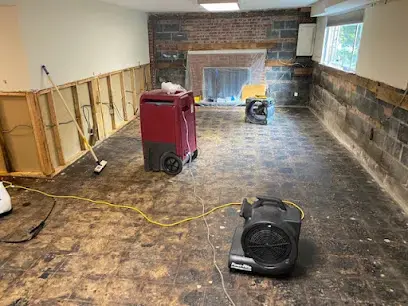
Then the drying starts. Air movers push dry air across wet surfaces, and dehumidifiers pull the moisture out of the room.
Moisture meters and a thermal camera show what the eye cannot, which is how far the water traveled behind the walls. The crew opens only where the readings say it is needed.
Drying ends when readings come back to normal, not when the room feels dry. A basement that only feels dry can still hold wet framing.
A water extraction visit often comes first, because every inch of water left in place keeps soaking into the structure.
After the work is done, the final readings go into the claim file along with photographs of the pit, the pump and each room.
- Extraction removes the standing water first.
- Wet pad and damaged drywall come out where readings call for it.
- Air movers and dehumidifiers run until the structure reads normal.
- The crew keeps the readings so the claim file shows the work.
Getting ready before the next storm
The cheapest cleanup is the one that never happens. A pump that is tested before the wet season has a much better chance of running when it counts.
These checks take little time and do not need special tools.
- Pour water into the pit and watch the pump start, run and shut off.
- Clear the discharge pipe and confirm it drains away from the house.
- Add a battery backup if storms often knock out power.
- Keep valuable items off the basement floor and away from the pit.
- Know who to call so the first step after a failure is not a search.
Questions
Why does my Germantown basement flood when the pump is running?
Clay rich Piedmont soil holds water against the foundation, so heavy rain can send water in faster than one pump moves it out. A clogged or poorly aimed discharge pipe makes it worse.
Can I just run a wet vacuum and wait for it to dry?
A wet vacuum removes surface water, but carpet pad, drywall and framing keep holding moisture. Without meter readings it is hard to know when the structure is truly dry.
Is storm water that comes up through the floor clean?
Not reliably. Water that moved through the ground and the yard can carry soil and contaminants, so cleanup treats the surfaces as well as removing the water.
Should I replace the pump or call a restoration team first?
Call for extraction first so the water comes out before it spreads, then have a plumber check or replace the pump. The two jobs fit together.
Does the cleanup cover finished basements in townhouses and condos?
Yes. Lower levels in townhouses, garden condos and single family homes are all dried to readings, and shared walls are checked when the water may have crossed them.
How soon should I call after the pump stops?
As soon as water reaches the floor. Water spreads into carpet, pad and the bottom of the drywall, and removing it early lets the crew save more of the room.