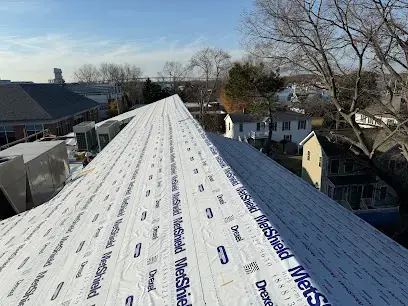
A roof on a ridge top takes the weather head on, and Mount Airy sits on exactly that kind of ground. This post follows a thunderstorm leak from the shingles to the attic to the ceiling, and explains how the water is stopped, removed and dried.
Key takeaways
- Mount Airy sits on Parr's Ridge, where cold, windy air gave the town its name, and its roofs take thunderstorm rain and wind directly.
- Severe thunderstorms and flash flooding hit Mount Airy on July 31, 2025, closing roads and knocking out power in places.
- A roof leak shows up late: the water passes through shingles, flashing and attic insulation before a ceiling stain appears.
- The leak is stopped first, then wet insulation and drywall are removed and the rest is dried to readings.
- A small ceiling stain can sit on top of a much larger wet area, so the structure is checked with meters.
A ridge top town and its roofs
Mount Airy began in the 1830s as a settlement of houses and stores along Parr's Ridge. The town's name came from the cold, windy air crossing that ridge.
Wind and rain cross the same ground today. A roof on high ground gets the full force of a thunderstorm, with rain arriving sideways as well as from above.
That is the setting for every leak described here.
Mount Airy is part of both the Washington and Baltimore metro areas, and many residents commute to one or the other. A leak that appears while the owner is at work can run for a long time before anyone sees it.
The July 31, 2025 storms
On July 31, 2025, severe thunderstorms brought flash flooding to Mount Airy and parts of Maryland. The storms hit in the late afternoon, closed roads and knocked out power in places.
Flash flooding is mostly a ground story, and roofs are the other half. The same storm that sends water across roads can drive rain under shingles and around flashing.
A leak that begins in a storm may not show itself that day.
Storm after storm also loosens a roof little by little. The leak that shows up in July may have started with a weakness left by an earlier storm.
How water gets past a roof
Roofs fail at their weak points more often than across open shingle. The places to look are the details.
Roofs rarely fail all at once. A small lift in flashing or a few loose shingles can be enough for water to find the deck.
A roofer can inspect the roof for these signs after a hard storm, even when no stain has shown yet.
- Flashing around chimneys, skylights and vents can lift or crack.
- Shingles loosened by wind let rain run under them.
- Roof valleys carry more water and test every seal.
- Gutters that overflow push water behind the fascia and into the wall.
What happens inside the house
Water that gets under the roof covering falls onto the roof deck and then into the attic. It soaks the insulation first, because insulation holds water like a sponge.
Only when the insulation is saturated does water reach the ceiling drywall. By then the damage above is already larger than the stain below.
Insulation is the first to hold water, and wet insulation loses much of its value. It also keeps the roof deck and framing wet for much longer than rain alone would.
That is why the attic is checked together with the ceiling.
Signs the ceiling is taking water
Look for brown rings, a sagging or bubbling surface, peeling paint or drips during rain.
- Stains that grow after each storm.
- A ceiling that feels soft or looks bulged.
- Damp or compressed insulation when the attic is checked.
Why the stain can mislead
Water travels along framing before it drops. The stain may sit well away from the roof opening, so the source is traced before anything is cut.
Stop the leak first
Drying a ceiling while rain still enters is a waste of effort. The first job is to stop the water at its source.
A roofer or the owner may tarp the damaged area as a temporary step. Meanwhile, protect belongings and keep people out from under any sagging drywall.
If rain is still falling and water is dripping, shut off power to a room only if the switch and the area around it are dry.
- Move furniture and valuables away from the wet area.
- Place containers under active drips.
- Photograph the ceiling, the attic and the roof damage.
- Do not stand under a ceiling that bulges with water.
How the interior damage is dried
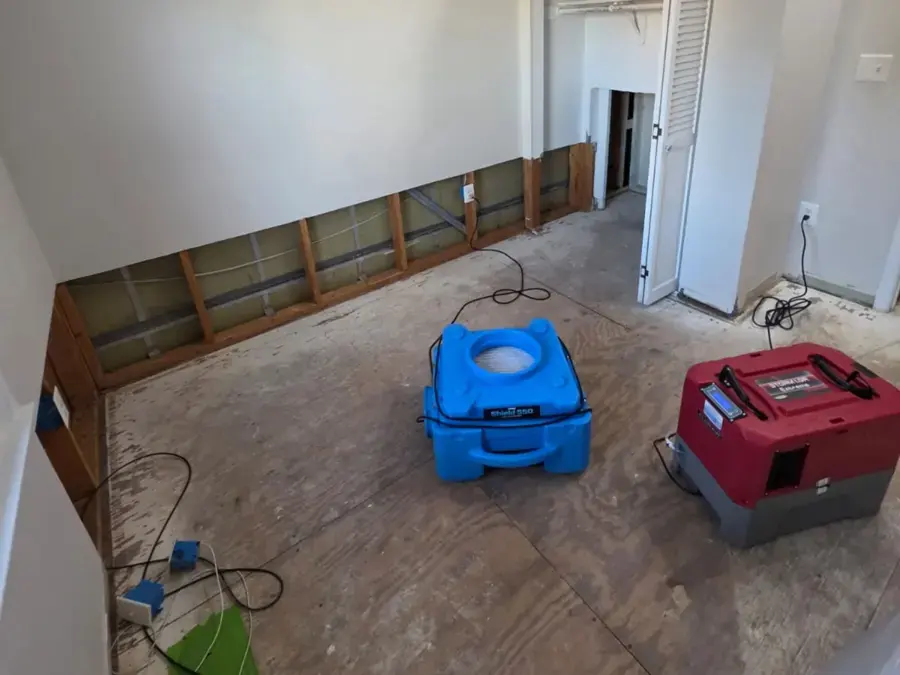
Once the leak is stopped, the interior work begins. Roof leak water damage cleanup removes wet insulation and opens ceiling drywall where moisture readings call for it.
Moisture meters and a thermal camera map the wet area. The crew cuts only as far as the water traveled.
Air movers and dehumidifiers then dry the framing and the room around it. A ceiling leak job is finished when the readings return to normal, not when the stain stops being visible.
Because the structure above the ceiling stays wet longer than the drywall below, the crew looks at both when judging the job.
- Wet insulation is removed and bagged.
- Damaged drywall is cut out where readings call for it.
- The framing is dried with air movers and dehumidifiers.
- Readings are logged for the claim file.
Older homes and newer ones
The older housing in Mount Airy is in the downtown historic district near Main Street. Strong housing growth since the 1990s followed the Mount Airy Master Plan.
Older and newer roofs can show trouble in different places, so each leak is traced on its own. See the Mount Airy water damage page for the other problems the team handles in town.
The Mount Airy Volunteer Fire Department responds in town for emergencies, and a leak that involves electrical equipment or a collapsing ceiling is one more reason to call for help when safety is in doubt.
Questions
Why did my ceiling stain appear days after the storm?
Water passes through the roof covering and soaks attic insulation before it reaches the drywall. The stain can show up long after the rain stopped.
Is Mount Airy roof damage common after thunderstorms?
Roofs on a ridge top take thunderstorm rain and wind directly. Mount Airy had severe thunderstorms and flash flooding on July 31, 2025.
Should I cut into a bulging ceiling myself?
Stay out from under it. A ceiling holding water can fall, so a trained crew handles the opening safely and dries what is behind it.
What gets removed after a roof leak?
Wet attic insulation and ceiling drywall are removed where moisture readings call for it. Framing is dried in place.
How do I know the ceiling is really dry?
Moisture meters give readings in the drywall and framing. The job is done when the readings return to normal.
Do older homes near Main Street leak differently from newer ones?
They can. The older housing in town is in the downtown historic district, and growth since the 1990s followed the Mount Airy Master Plan, so each roof is judged on its own.