When a big water main breaks, the news is about closed roads and lost water service. A water main break and a flooded house are separate problems with separate owners, and this post sorts out who handles what and how the water inside a home comes out.
Key takeaways
- A water main break is WSSC Water's repair, while a broken pipe or standing water inside a home is the owner's problem to dry and restore.
- In December 2025, a 24 inch WSSC main broke on Frederick Road in Gaithersburg, closed the road both ways and cut water to about 78 customers for more than 24 hours.
- Standing water has to be pulled out before drying starts, and extraction is the first step the restoration team takes.
- Lost water service can be followed by pressure changes and leaks when it returns, so check taps and supply connections.
- WSSC Water runs a 24 hour emergency number for main breaks and sewer backups into homes.
What happened on Frederick Road
In December 2025, a 24 inch WSSC water main broke on Frederick Road in Gaithersburg. The break closed the road in both directions.
About 78 customers lost water, and service was restored after more than 24 hours.
Those details show how a single break can ripple outward. Traffic stops, neighbors lose service and some properties near the break may also see water where it should not be.
WSSC Water draws county drinking water from its Potomac and Patuxent water filtration plants, and the Potomac plant is the larger. A main of that size belongs to the system that moves treated water from those plants toward homes.
That context explains why a break on a busy road gets attention. It affects the road, the neighbors and every property nearby.
A main break and a flooded home are different jobs
WSSC Water is the public water and sewer utility serving Gaithersburg. When a main breaks, WSSC Water repairs the main and restores service.
What happens inside a building is a different matter. A broken pipe in a wall, a failed fitting or water that reached a lower level belongs to the owner and the restoration work.
Keeping those two jobs apart saves time, because confusion lets materials soak longer.
Think of it as a handoff. The utility works on the public side, and the owner works on the property side.
Where the water goes after that handoff is what the rest of this post covers.
- The main and the street are WSSC Water's repair.
- The pipes on the property side and everything inside the building are the owner's.
- Insurance questions start with where the water came from and where it went.
How standing water gets into a house
Most homes never see water from a main break directly. Still, a break or a storm can leave standing water, and standing water is the first thing to remove.
There are a few common paths.
Gaithersburg homes range from older houses in Olde Towne Gaithersburg to communities built from 1990 onward, so plumbing and foundations differ from one street to the next. No single rule fits every house.
Water from outside
Heavy runoff or a broken main near a foundation can send water toward windows, doors and low spots. Basements and ground level rooms are the first to feel it.
Water from a pipe inside
Service returning after an outage can push air and pressure through the plumbing. An old fitting, a worn hose or a weak joint may start leaking only when the water comes back on.
- Open each tap slowly and let the air clear.
- Look under sinks and behind the washer for drips.
- Check the ceiling below a bathroom for new stains.
What to do first when water is standing
Safety comes first. Water and electricity do not mix, so stay out of rooms where water touches outlets, cords or appliances.
Then act on the water itself. The longer the water sits, the more of it moves into carpet, drywall and wood.
If the water is coming from outside and is rising, treat it as an emergency and keep everyone away from it until the electricity is dealt with.
- Shut off the main valve inside the house if a pipe is leaking.
- Move furniture, rugs and boxes out of the water.
- Take photographs of the water level and what it touched.
- Call WSSC Water about a main break and a restoration team about the inside of the house.
- Never use a household vacuum on standing water.
- Keep children and pets out of the wet rooms.
- Do not walk through water near outlets or the panel.
How standing water is pulled out
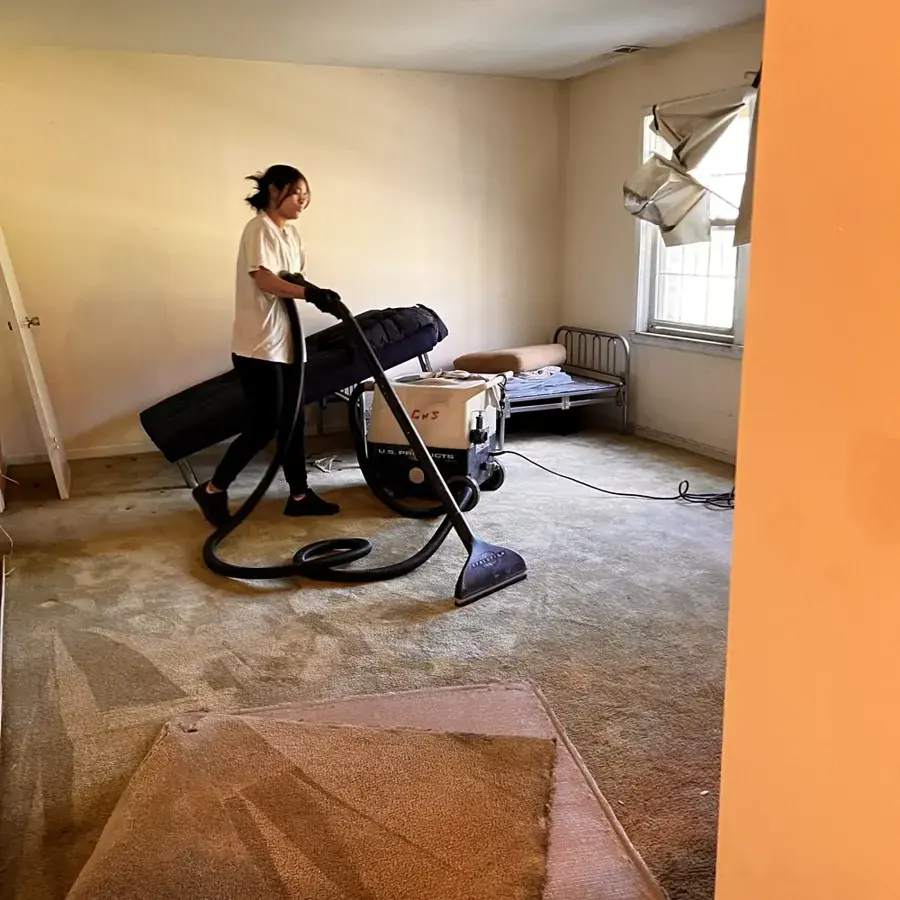
The main step is water extraction, and it comes before any drying. Truck mounted and portable extractors pull water from carpet, pad and hard floors.
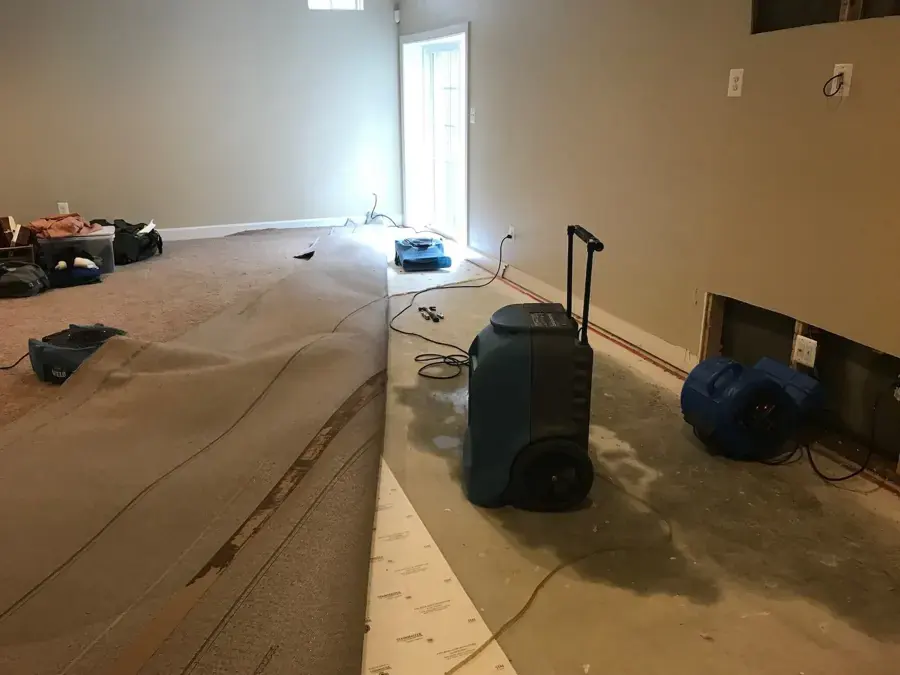
Pulling the water first matters because air movers and dehumidifiers cannot work well on a soaked floor. Extraction cuts the drying load and the damage to the structure.
After the water is out, the crew checks what the water reached. Moisture meters show hidden water in walls and subfloors.
Large amounts of water are slow to move without equipment. A restoration team brings extractors built for carpet and pad, which a household wet vacuum cannot match.
- Standing water is extracted from every affected room.
- Wet pad and damaged materials are removed where they cannot be saved.
- Air movers and dehumidifiers dry the rest to normal readings.
- Readings are recorded for the claim file.
When the cause is a broken pipe in the house
If a pipe inside the house is leaking, the water has to be stopped before anything is dried. That usually means shutting the main and calling a plumber.
A burst pipe in Gaithersburg is the property side version of the same problem a water main break creates on the street.
The restoration team follows the plumber. It removes the water, finds where it spread and dries the area to readings.
Cold weather brings its own version of this problem. In January 2026, extreme cold led WSSC Water to ask all customers to use water for essential needs only, and a pipe that freezes inside a house is the property side version of the same strain.
Keeping up with the repair and the claim
Keep a record from the first day. Dates, photographs and readings make a claim easier to explain.
The Gaithersburg water damage page lists the other problems the team handles in town, from sump pump failures to storm water.
The restoration team can also explain how the readings and photographs fit into an insurance conversation, so the claim reflects the whole job.
- Write down when water service stopped and returned.
- Save receipts for emergency supplies.
- Keep damaged items until the adjuster has seen them.
Questions
Who fixes a water main break in Gaithersburg?
WSSC Water is the public utility serving Gaithersburg and repairs its mains. Damage inside a home is handled by the owner, a plumber and a restoration team.
Can a water main break flood my basement?
A break or a storm can leave standing water near a building, and water can find low spots such as basements. Standing water is removed first and the structure is dried afterward.
Why check my pipes after service comes back?
Pressure and air returning to the plumbing can reveal weak fittings, worn hoses and joints that start leaking once the water is on again.
Does WSSC Water have a 24 hour emergency number?
Yes. WSSC Water runs a 24 hour emergency number for water main breaks and sewer backups into homes.
How is the water removed from carpet?
Truck mounted and portable extractors pull the water from the carpet and pad. Pad that cannot be saved is removed and the rest is dried to readings.
Does a water main break mean my house will flood?
No. Most homes near a break only lose service. A break or a storm can still leave standing water in low spots, and any standing water inside is removed before drying starts.