Water Extraction in Gaithersburg
Standing water has to leave the building before drying can work. In Gaithersburg, crews pull it out with portable or truck mounted extractors, then measure what the floors and walls still hold.
(888) 535-8182Request water removal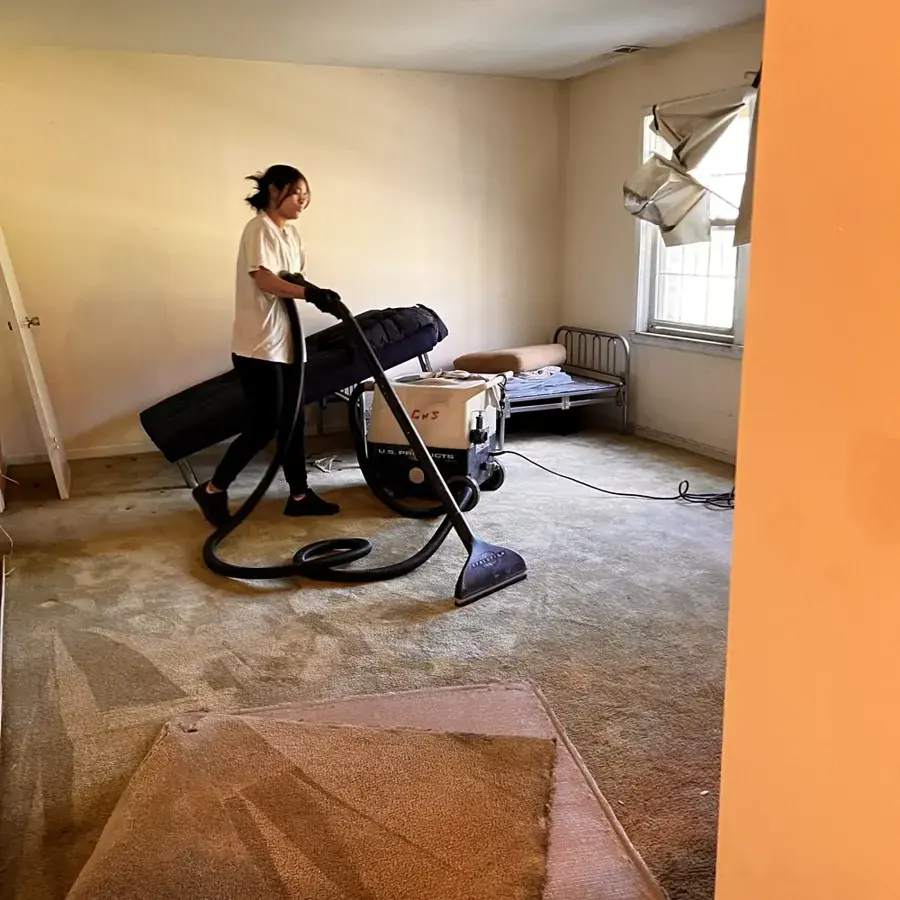
First steps for water extraction and removal in Gaithersburg
- 1
Check for hazards
Look for energized outlets, sagging ceilings and slick stairs before anyone steps into standing water.
- 2
Stop the inflow
Close the valve or shut the appliance feeding the water. If the source is outside, wait until it is safe.
- 3
Raise the valuables
Lift electronics, papers and small furniture onto dry shelves or upstairs rooms.
- 4
Photograph the depth
Take pictures of the waterline on walls and furniture before any pumping begins.
How water extraction and removal is handled in Gaithersburg
Removing water is the step that decides how long everything after it takes. Every gallon left in carpet or a floor becomes humidity that drying equipment must then pull out of the air.
Before a single fan goes down, the tech who does the walkthrough takes readings in the wet room and the rooms around it, so the drying plan matches what is actually wet. The drying team pulls equipment on readings, not on how a wall looks.
What does water extraction and removal cost in Gaithersburg, MD?
One shallow room costs the least. Truck mounted work across a basement or several rooms costs more, and deep or contaminated water costs the most.
One room, shallow water
Basement or several rooms
Deep Category 3 water
Ranges are typical, not a quote: category of water, square footage, material class and how fast drying started move the number most. Run the water damage cost calculator for a closer range.
The water extraction and removal process, start to dry
- 1
Lower the depth
Submersible pumps drop standing water so extractors can reach the floor.
- 2
Extract the surface
Wands and truck mounted units pull water from carpet, pad and hard floors.
- 3
Read the moisture
Meters locate what remains in drywall, subfloor and framing.
- 4
Hand off to drying
Equipment is placed so the structure dries to a recorded standard.
Where standing water comes from
Standing water in a home can come from a storm, a failed pipe, an appliance or a sewage backup. The 24 inch WSSC water main break on Frederick Road in December 2025 was a reminder of how much water a single failure can release.
The source also sets the safety rules. Clean supply water allows bare hands and quick work, while storm or sewage water calls for protective gear and sealed disposal.
Timing matters because water keeps spreading. Wicking pulls moisture upward into drywall and sideways into adjoining rooms, so removal starts at the lowest point and works outward.
Choosing the right equipment
A shallow spill on one carpeted room is handled with a portable extractor. A flooded basement or several rooms calls for a truck mounted unit, and deep water is first lowered with submersible pumps.
- Wand extractors pull water out of carpet and pad.
- Pumps drop standing depth before the extractor starts.
- Squeegees and wet vacuums clear tile and hard floors.
What happens after the water is out
Extraction removes bulk water, not moisture. Carpet, pad, drywall and subfloor still hold water that only a meter can find, so readings follow extraction and set the drying plan.
Pad is almost always discarded because it cannot be dried well, while carpet may be lifted and saved if the water was clean. When the water came from a storm, storm flood cleanup adds treatment and removal steps, and structural drying finishes the job.
Trade fact: Pulling water out within the first day cuts how far moisture wicks into drywall and framing, which shortens the drying that follows.
Water extraction and removal across Gaithersburg and nearby towns
Water removal covers ZIP codes 20877, 20878, 20879 and 20882, from Olde Towne Gaithersburg and Lakelands to Quince Orchard, Summit Hall and Metropolitan Grove.
The same service nearby: water extraction and removal in Germantown, Rockville, Poolesville.
Water damage restoration in Gaithersburg · every town covered
Related water damage services in Gaithersburg
Water Extraction and Removal questions in Gaithersburg, MD
Is extraction the same as drying?
No. Extraction removes liquid water, while drying pulls moisture out of materials and air. Most jobs need both, and skipping the second leaves hidden dampness behind.
Can a shop vacuum do the job?
A shop vacuum helps with a small spill, but it cannot reach water in pad and subfloor. A powerful extractor pulls more, faster, and leaves less behind.
Why is pad thrown out?
Pad acts like a sponge and dries very slowly under carpet. Replacing it costs less than the risk of odor and mold, so removal is the normal choice.
Does water type change the plan?
Yes. Clean water allows saving many materials, gray water needs a closer look, and Category 3 water calls for protective gear, containment and removal of porous items.
What if the water came from the street?
A street main break is a WSSC Water repair, but any water that enters the house still needs extraction. The utility runs a 24 hour emergency number for main problems.
Still dealing with it?
Standing water in the house?
Get the water out of Gaithersburg homes
Share the depth and the source, and a crew brings the right extraction gear for the rooms involved.
(888) 535-8182Gaithersburg extraction crew