A sewer backup raises two questions at once: who clears the blockage, and who cleans up the mess it leaves behind. In Rockville the answer to the first depends on where the blockage sits, and the answer to the second is always the same, which is a careful sanitation job.
Key takeaways
- Call the City of Rockville's 24 hour emergency number first, so it can check whether the blockage sits in a pipe the city maintains.
- If the blockage is not in a city maintained pipe, the owner must hire a registered master plumber to locate and clear it.
- The City of Rockville serves about 70% of the city, roughly 13,000 accounts, and WSSC Water serves the rest, so confirm which one serves the address.
- The city's claims policy can provide up to $2,500 toward documented remediation costs and insurance deductibles for sewer backups.
- Maryland requires insurers to offer water and sewer backup coverage in writing, and standard policies likely exclude it unless an endorsement is bought.
Start by calling the city
The City of Rockville runs a 24 hour emergency number for sewer backups, water main breaks and stormwater emergencies. Calling it first matters.
After a backup report, the city checks whether the blockage is in the lateral or the main sewer pipe that it maintains. That check decides who is responsible for the next step.
Keep notes while the call is happening: the time water first appeared, which drains were affected and what the floor looked like.
If the backup appears during a storm or just after water service has been interrupted, mention that to the city. Context helps the city decide where to look first.
- Report the backup to the city before anything else.
- Stop using sinks, tubs, toilets and the washer so no more water enters the pipe.
- Keep children and pets out of the affected room.
City or WSSC Water: confirm who serves the address
Rockville has two providers. The City of Rockville provides water and sewer service to about 70% of the city, about 13,000 accounts.
All other Rockville residents and businesses are served by WSSC Water, the Washington Suburban Sanitary Commission.
The city publishes a water service provider map, so an owner can check whether the city or WSSC serves an address.
Why does this matter? Because the first phone call goes to a different place depending on the provider, and calling the wrong one costs time while materials sit wet.
If the blockage is not in a city maintained pipe
When the blockage is not in a pipe the city maintains, the owner must hire a registered master plumber to locate and clear it.
The plumber clears the pipe, and the restoration team handles the damage the backup caused. The two jobs run side by side and each one needs its own record.
Registered master plumbers locate the blockage and clear it. They do not dry the house or remove damaged materials, which is the restoration team's part of the work.
Common causes the city names
The city names fats, oils and grease and wipes as common causes of sewer blockages. Both build up inside pipes and eventually stop flow.
- Keep cooking grease out of drains.
- Throw wipes in the trash, even those sold as flushable.
Where the water goes after the pipe
Wastewater from Rockville travels through WSSC transmission mains to the Potomac Interceptor and then to the Blue Plains Wastewater Treatment Plant. A backup at one home is one point in a much larger system.
Why sewage water is a different job
A sewer backup is not a clean water leak. The water carries contamination, and that changes every decision that follows.
Porous materials such as carpet, pad and drywall that sewage touched usually cannot be saved. Hard surfaces can be cleaned and treated.
Nothing about the work is guesswork. Surfaces are treated, and the room is dried only after the contaminated material is gone.
A common mistake is treating a small backup as a nuisance and wiping it up with towels. Even a thin film of sewage on a floor can soak into carpet, wood and the base of drywall.
Anything that cannot be cleaned to a hard, nonporous surface is a candidate for removal.
- Contain the area so the water does not spread to clean rooms.
- Remove porous materials that absorbed sewage.
- Clean and treat every surface the water reached.
- Dry the structure to normal readings with air movers and dehumidifiers.
What the cleanup looks like in a Rockville home
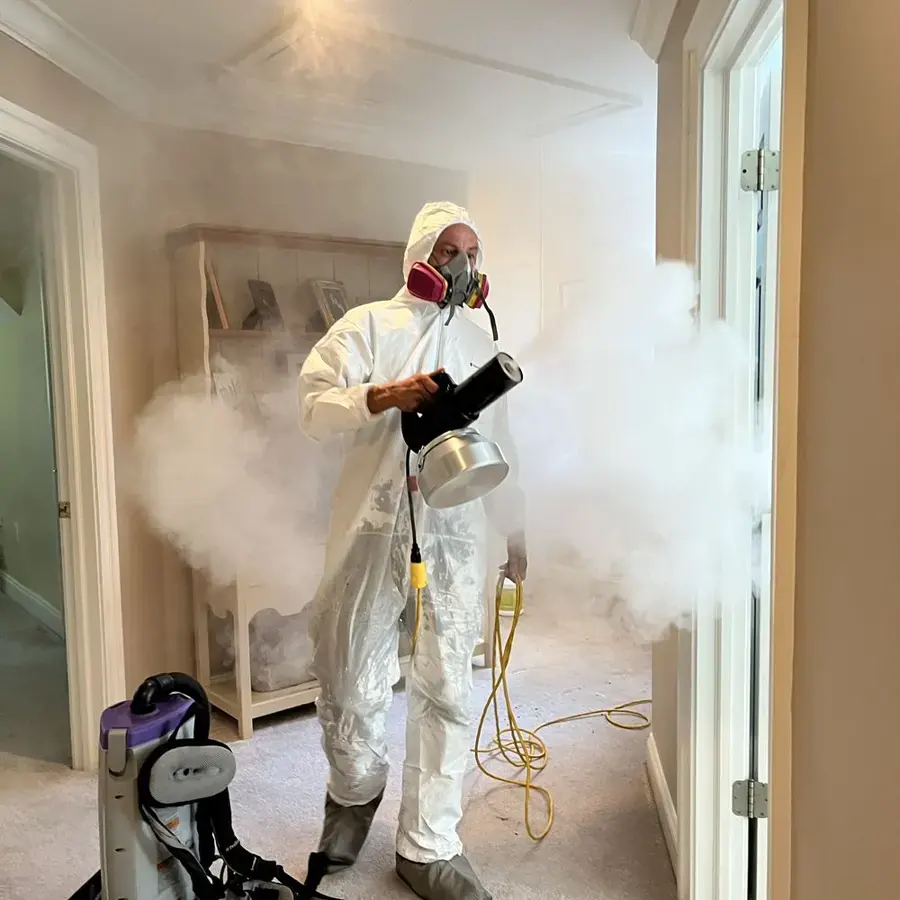
The first job is sewage backup cleanup. The crew wears protective gear, extracts the contaminated water and sets up containment.
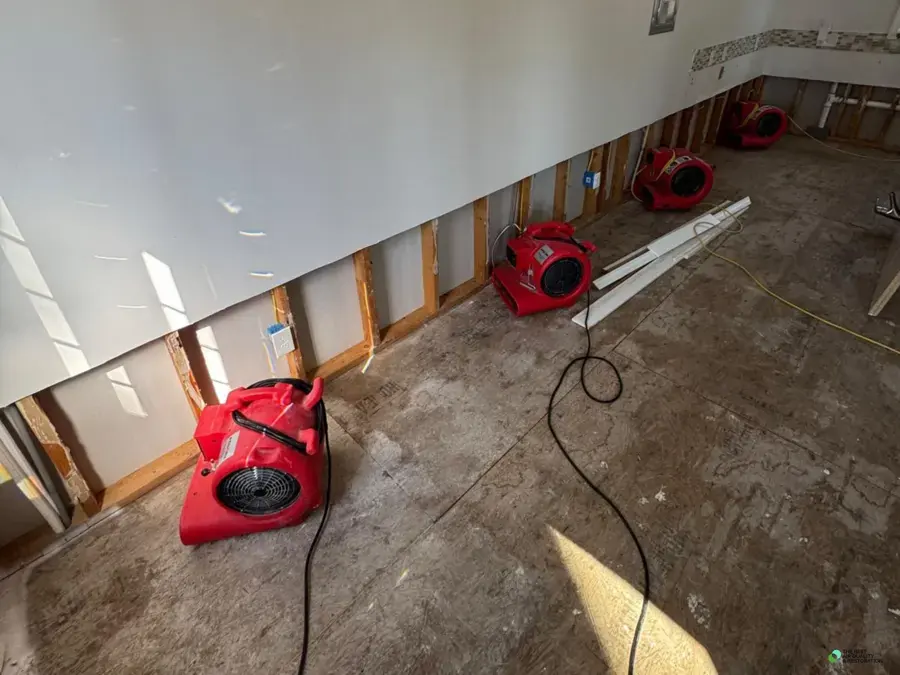
Next comes removal. Wet flooring, pad and the lower part of drywall come out where readings and inspection say they must.
Last is structural drying, which dries framing, subfloor and concrete until the readings return to normal. Skipping this step is how damp walls turn into long term trouble.
Throughout the work, the crew documents each step. Photographs and moisture readings give the insurer and the city a record that matches the receipts.
Money questions: the city claims policy and insurance
The city's claims policy can provide up to $2,500 toward documented remediation costs and insurance deductibles for sewer backups, water main breaks and stormwater discharge.
Documented is the key word. Keep invoices, photographs and the restoration team's moisture readings.
Maryland requires home insurers to offer water and sewer backup coverage in writing at application and renewal. Standard policies likely exclude it unless an endorsement is bought, so read the policy before assuming anything.
Insurance companies look at the paper trail. A claim built on photographs, readings and invoices is easier to explain than one built on memory.
- Photograph the backup before cleanup begins.
- Save every invoice from the plumber and the restoration team.
- Ask the insurer whether the policy carries a backup endorsement.
Keeping the next backup away
Some blockages are out of an owner's hands, but habits help. Keeping grease and wipes out of drains cuts the most common cause the city names.
The Rockville water damage page lists the other water problems the team handles in the city.
If the same drain backs up again, tell the city and the plumber. A repeat is a sign that something upstream needs attention, and a record of earlier events helps.
Questions
Who do I call first for a sewer backup in Rockville?
Call the City of Rockville's 24 hour emergency number first. The city checks whether the blockage is in a lateral or main it maintains.
Who pays to clear the pipe if the city does not maintain it?
The owner must hire a registered master plumber to locate and clear the blockage. The city does not clear pipes it does not maintain.
Can the city help with cleanup costs?
The city's claims policy can provide up to $2,500 toward documented remediation costs and insurance deductibles for sewer backups, water main breaks and stormwater discharge.
Does homeowners insurance cover a sewer backup in Maryland?
Maryland requires insurers to offer water and sewer backup coverage in writing, but standard policies likely exclude it unless an endorsement is bought.
Can carpet that touched sewage be saved?
Usually not. Porous materials that absorbed sewage are removed, while hard surfaces are cleaned and treated before drying.
Why not just clean up a small sewage backup with towels?
Sewage soaks into carpet, wood and drywall, and towels cannot clean it from inside those materials. Porous materials that absorbed it are usually removed and surfaces are treated.