Structural Drying in Rockville
Once the water is out, the moisture left in framing, subfloors and drywall still has to leave. Rockville crews place air movers and dehumidifiers and read the materials until they reach dry targets.
(888) 535-8182Request structural drying in Rockville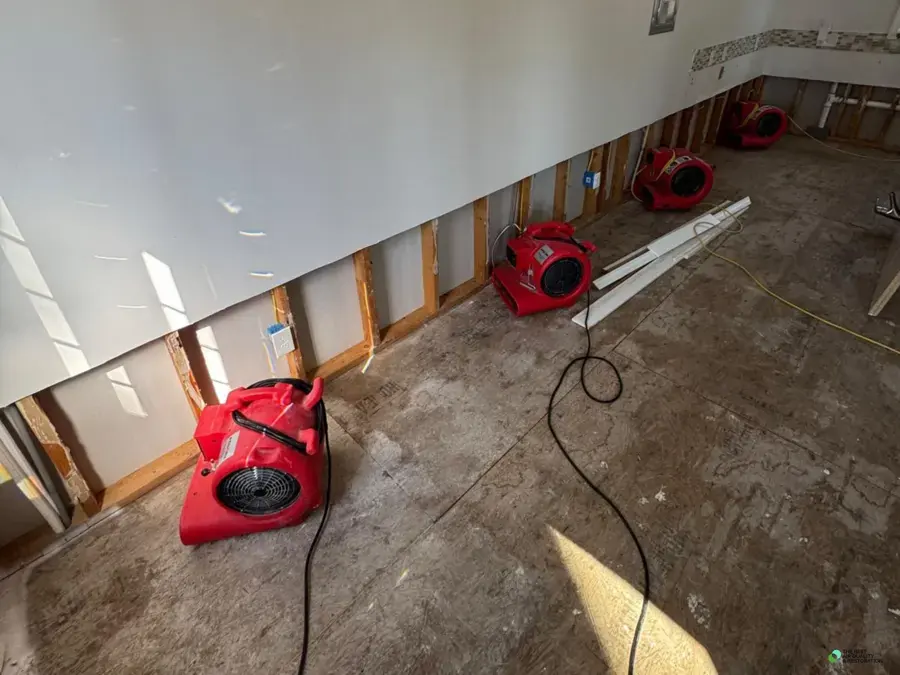
First steps for structural drying and dehumidification in Rockville
- 1
Leave equipment on
Do not shut off air movers or dehumidifiers to save power, because drying stops and moisture settles back in.
- 2
Keep doors closed
Shut doors and windows in the drying area so each dehumidifier works on the room and not on the outside air.
- 3
Do not rearrange
Leave the equipment and cords where they sit, because every piece was placed from meter readings.
- 4
Report changes
Tell the crew about odors, new stains or wet spots, which can signal moisture the readings missed.
How structural drying and dehumidification is handled in Rockville
Drying is the stage that turns a water removal job into a finished repair. A surface can feel dry in a day while the framing behind it stays damp, so every material gets a measured number rather than a touch test. The method applies to any home or building in Rockville after a leak, backup or flood, whether the water came from a pipe, a roof or a creek.
Before a single fan goes down, the tech who does the walkthrough takes readings in the wet room and the rooms around it, so the drying plan matches what is actually wet. The drying team pulls equipment on readings, not on how a wall looks.
What does structural drying and dehumidification cost in Rockville, MD?
Structural drying in Rockville usually costs $900 to $12,000, depending on the affected area, the materials and how many days it takes.
One or two rooms
Finished basement or floor
Class 4, hardwood or block
Ranges are typical, not a quote: category of water, square footage, material class and how fast drying started move the number most. Run the water damage cost calculator for a closer range.
The structural drying and dehumidification process, start to dry
- 1
Place
Fans and dehumidifiers are set up, matched to the room volume and the material.
- 2
Monitor
Readings are taken each visit and compared with a dry reference.
- 3
Adjust
Equipment is moved or added as the wettest spots change.
- 4
Release
Gear is pulled only once each material has reached its dry target.
Equipment and what each piece does
Fans lift dampness off wet surfaces into the room air, and low grain refrigerant dehumidifiers condense it out so it cannot soak back in. The pair is matched to the cubic volume of each room.
- Air movers are aimed along wall bases and under cabinets.
- LGR dehumidifiers remove moisture from the air in a closed work area.
- Drying mats pull water from hardwood and some engineered floors.
- Desiccant units handle cold spaces and dense materials that LGR units dry slowly.
Reading the materials
Moisture meters give a number for drywall, wood and concrete, and thermal imaging shows patterns the meter misses. The crew compares each number with a dry reference taken from an unaffected area of the same material. Equipment stays until the wet readings come down to that reference.
Each visit adds to a log of readings and equipment changes. That log is what shows an adjuster the drying ended at a measured target and not at a guess.
Why equipment gets moved
Water behaves differently in each room. As readings fall, fans and dehumidifiers shift toward whatever is still wet, and finished areas are released from the setup. Walls with cabinets or built-ins sometimes need small holes or removed trim so air can reach the cavity behind them.
Structural drying usually follows water extraction, and larger events are covered under storm flood cleanup.
Trade fact: Class 4 describes dense, slow-drying materials such as hardwood and concrete block, which often call for desiccant units or drying mats.
Structural drying and dehumidification across Rockville and nearby towns
Structural drying covers homes and buildings across Rockville, including ZIP 20850 and 20851, Twinbrook, King Farm, Lincoln Park, East Rockville and Woodley Gardens.
The same service nearby: structural drying and dehumidification in Germantown, Gaithersburg, Poolesville.
Related water damage services in Rockville
Structural Drying and Dehumidification questions in Rockville, MD
How long does structural drying take?
Many jobs take three to five days, and dense materials or a Class 4 loss can run longer. The meter decides when equipment leaves, not the calendar.
Why are fans alone not enough?
A fan only circulates air. A dehumidifier is what actually takes water out of it, which lets damp materials keep giving up their moisture.
Does the equipment need to run all night?
Yes. Drying works only while air movers and dehumidifiers run, and stopping them lets moisture drift back into the materials.
How do crews know when drying is done?
The crew reads each material with a meter and sets the numbers beside dry reference readings from untouched areas. Once they match, the equipment comes out.
Can hardwood floors be dried instead of replaced?
Sometimes. Drying mats pull water from the boards, and catching the loss early improves the odds, though cupped or buckled boards may still need replacement.
Will my electric bill rise during drying?
Yes, the equipment draws power for several days. Hold on to the drying logs, since some insurers weigh the added electricity in a claim.
Still dealing with it?
Water out but walls still damp?
Dry the structure to a number
A Rockville crew sizes the equipment to the room, reads the materials daily and removes it only at dry targets.
(888) 535-8182Request a drying plan