Storm Flood Cleanup in Gaithersburg
Storm water brings silt, bacteria and debris with it, so cleanup is more than drying. In Gaithersburg, crews remove mud and soaked materials, treat what stays and dry the structure to recorded readings.
(888) 535-8182Request flood cleanup in Gaithersburg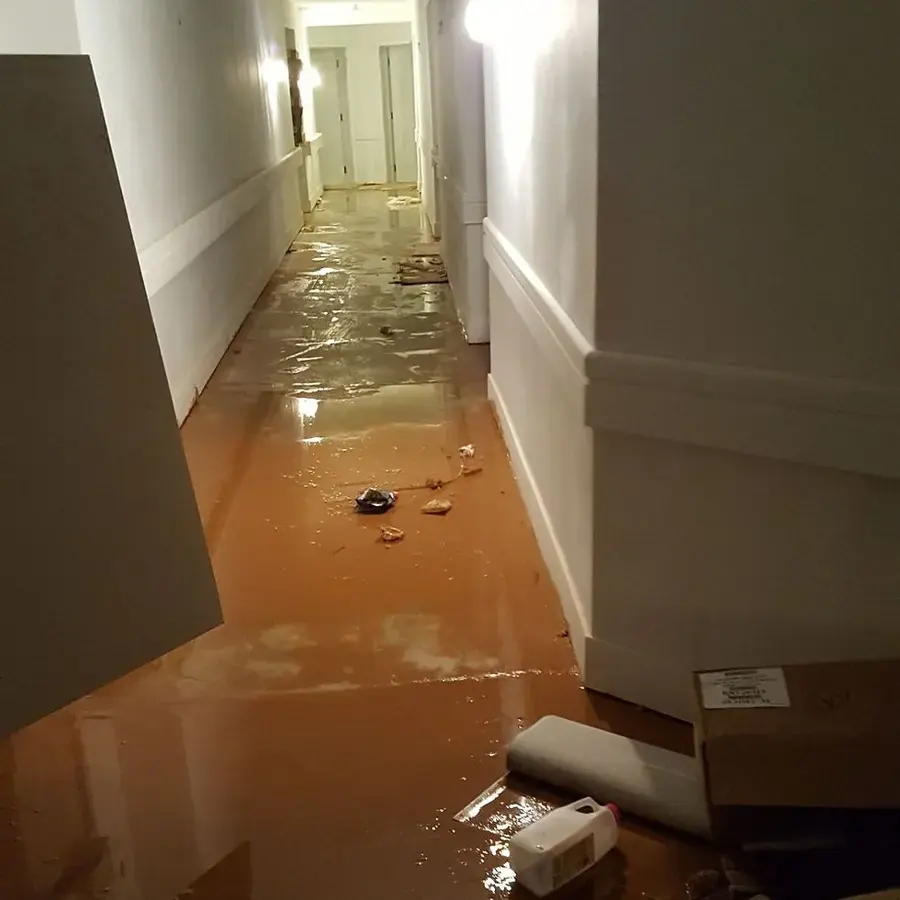
First steps for storm and flash flood cleanup in Gaithersburg
- 1
Stay out of floodwater
It can hide debris, sharp objects and live electrical hazards. Wait until the water drops and the power is confirmed off.
- 2
Protect yourself
Wear boots, gloves and a mask if anything must be moved. Avoid touching wet items with bare skin.
- 3
Mark the water level
Note the highest point on walls and furniture and photograph it, since that height decides what must be removed.
- 4
Call the carrier
Report the loss early, and ask whether flood coverage applies, because storm water and sewage are treated differently from pipe water.
How storm and flash flood cleanup is handled in Gaithersburg
Floodwater that comes from outside is treated as contaminated from the moment it enters. It crosses yards, roads and drains first, so a storm cleanup removes what it touched and treats the rest instead of simply drying it.
Before a single fan goes down, the tech who does the walkthrough takes readings in the wet room and the rooms around it, so the drying plan matches what is actually wet. The drying team pulls equipment on readings, not on how a wall looks.
What does storm and flash flood cleanup cost in Gaithersburg, MD?
A garage or unfinished level stays in the lowest range. A finished lower level costs far more, and deep or long flooding across several rooms costs the most.
Garage or bare lower level
Finished lower level
Deep or long flooding
Ranges are typical, not a quote: category of water, square footage, material class and how fast drying started move the number most. Run the water damage cost calculator for a closer range.
The storm and flash flood cleanup process, start to dry
- 1
Pump and clear
Water is pumped out, then mud and debris are shoveled and vacuumed.
- 2
Tear out
Porous materials below the water level are removed and bagged.
- 3
Clean and treat
Concrete, studs and plates are washed, then treated with an antimicrobial.
- 4
Dry and verify
Dehumidifiers and air movers run until readings reach a dry standard.
Three watersheds, many routes
The City of Gaithersburg contains three watersheds: Muddy Branch, Lower Great Seneca and Middle Great Seneca. Montgomery County's flood model covers Muddy Branch and Middle Great Seneca Creek, using 5.4 inches in 24 hours as its 10 year storm and 8.4 inches as its 100 year storm.
The county's 2021 list of flood prone roads included Clopper Road and Davis Mill Road at Great Seneca Creek, near Gaithersburg. Heavy rain on September 1, 2021 flooded roads across Montgomery County.
Flash flooding adds speed to the problem. Water that rises quickly leaves little time to move belongings, and it often carries more silt, so lower levels, garages and basement stairwells take the worst of it.
What a flood cleanup removes
Anything porous that touched floodwater is removed: carpet, pad, insulation and drywall below the water level. Hard surfaces such as concrete and framing are cleaned and treated, then dried.
- Mud and silt are shoveled and vacuumed before washing.
- Containment and PPE protect clean areas and workers.
- Antimicrobial treatment goes on concrete and framing that stay.
Contents are sorted too. Items that touched floodwater are separated into those that can be cleaned and those that must be discarded, and each is photographed first for the claim.
Drying after the cleanout
Once the debris is gone, air movers, dehumidifiers and sometimes desiccant units pull moisture from framing and slab. Related steps are covered under water extraction and structural drying.
Trade fact: Floodwater is Category 3 no matter how clear it looks, so soaked porous materials are removed rather than cleaned and kept.
Storm and flash flood cleanup across Gaithersburg and nearby towns
Storm flood work covers ZIP codes 20877, 20878, 20879 and 20882, including Olde Towne Gaithersburg, Summit Hall, Washingtonian Woods, Watkins Mill and Metropolitan Grove.
The same service nearby: storm and flash flood cleanup in Germantown, Rockville, Poolesville.
Water damage restoration in Gaithersburg · every town covered
Related water damage services in Gaithersburg
Storm and Flash Flood Cleanup questions in Gaithersburg, MD
Is floodwater always contaminated?
Water that enters from outside is treated as Category 3, because it crosses ground and drains before it reaches the house. It is handled with protective gear and removal.
Can flooded drywall and carpet be saved?
Not usually. Porous materials that sat in floodwater are removed, while concrete, studs and other hard surfaces can be cleaned, treated and dried.
Does homeowners insurance cover flooding?
Standard policies often exclude rising surface water, so a separate flood policy may be needed. Pipe and sewer related damage can be treated differently, and the carrier makes the decision.
How soon should cleanup start?
As early as safety allows, because wet materials keep absorbing moisture and mold can begin. Delays raise both the scope and the cost.
Does cleanup include the yard?
No. Restoration covers the house and its contents, so outdoor grading, drainage fixes and tree work are handled by other trades.
Why does dry looking drywall still need checking?
Moisture can sit inside the cavity or the framing. Meter readings show it, and equipment stays until the numbers match a dry reference.
Still dealing with it?
Flooding after a Gaithersburg storm?
Clean out and dry the lower level
Describe how high the water got and what it touched, and a crew plans cleanout, treatment and drying.
(888) 535-8182Gaithersburg flood response