Structural Drying in Gaithersburg
Structural drying removes the moisture that extraction leaves behind. In Gaithersburg, air movers and dehumidifiers are placed from moisture readings, and equipment stays until walls, floors and framing match a dry reference.
(888) 535-8182Request structural drying in Gaithersburg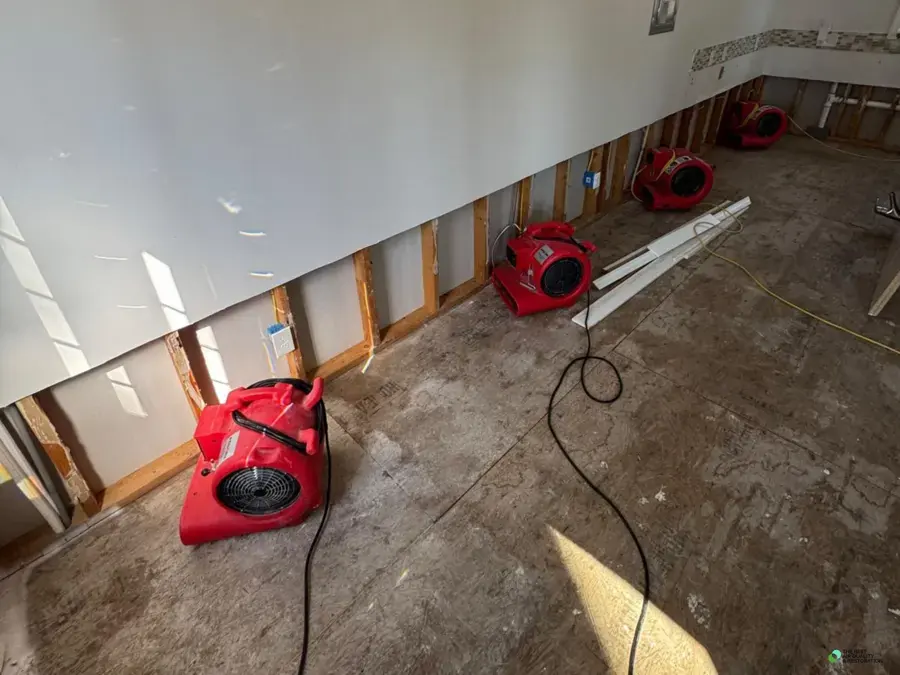
First steps for structural drying and dehumidification in Gaithersburg
- 1
Open the rooms
Open cabinet doors and closets inside the wet area so air can reach hidden surfaces.
- 2
Do not blow fans
Avoid blowing a household fan into a wet room, since it can push damp air into dry rooms.
- 3
Leave equipment on
Once drying equipment is set, keep it running. Turning it off early leaves moisture in the framing.
- 4
Keep a log
Note start dates and any changes, and keep every drying report for the insurance file.
How structural drying and dehumidification is handled in Gaithersburg
Once the water is out, the building still holds moisture in drywall, framing, subfloor and concrete. Structural drying moves that moisture into the air and then out of the room, and it is driven by readings instead of guesswork.
Before a single fan goes down, the tech who does the walkthrough takes readings in the wet room and the rooms around it, so the drying plan matches what is actually wet. The drying team pulls equipment on readings, not on how a wall looks.
What does structural drying and dehumidification cost in Gaithersburg, MD?
A small area dried with a few air movers costs the least. A finished floor needs more equipment, and dense materials add monitoring time.
Room or two
Whole finished floor
Class 4, hardwood or block
Ranges are typical, not a quote: category of water, square footage, material class and how fast drying started move the number most. Run the water damage cost calculator for a closer range.
The structural drying and dehumidification process, start to dry
- 1
Map
Meters and a camera show which materials are wet and how wet they are.
- 2
Place
Air movers and dehumidifiers are set so air crosses every wet surface.
- 3
Monitor
Readings are logged on each visit and equipment is moved or adjusted.
- 4
Verify
Equipment comes out only when readings match the dry goal for each material.
After a main break or a storm
After any event that puts water in a building, whether a storm or a main break like the one on Frederick Road in December 2025, drying follows extraction. The equipment plan depends on what was wet, how far it spread and which materials are dense enough to hold water a long time.
Moisture readings steer each step. A meter shows how wet a material is, and a thermal camera or hygrometer helps find where damp air is trapped.
How the equipment works together
Three kinds of tools do most of the work, and each has a different job.
- Air movers push dry air across wet surfaces to release moisture.
- LGR dehumidifiers pull that moisture out of the air and into a drain or tank.
- Drying mats and injection tools reach wet subfloor and wall cavities.
Knowing when to stop
Equipment stays until each material reaches its dry goal, which is set by comparing it to a dry area of the same type. Readings are logged on each visit, and the log goes into the claim file as proof that the structure is dry.
A drying plan changes as the job goes on. Equipment is moved, added or removed as readings fall, so the machines work where moisture remains instead of running in rooms that have already dried.
Dense materials such as hardwood, block and concrete take longer and sometimes need desiccant dehumidifiers. Related work includes basement flooding cleanup and water extraction.
Trade fact: Dehumidifiers work best in a closed room, so exterior doors and windows stay shut while equipment is running.
Structural drying and dehumidification across Gaithersburg and nearby towns
Drying work covers ZIP codes 20877, 20878, 20879 and 20882, including Olde Towne Gaithersburg, Kentlands, Lakelands, Diamond Farms and the Metropolitan Grove area.
The same service nearby: structural drying and dehumidification in Germantown, Rockville, Poolesville.
Water damage restoration in Gaithersburg · every town covered
Related water damage services in Gaithersburg
Structural Drying and Dehumidification questions in Gaithersburg, MD
How long does structural drying take?
It depends on the materials, the water and the space. Readings, not a calendar, decide when equipment leaves, so a crew gives an estimate only after the first moisture map.
Why are the machines loud and warm?
Dehumidifiers and air movers run hard to pull moisture out, and the heat they give off helps drying. The noise and warmth are signs the equipment is working.
Can equipment just be rented instead?
Rented units can help with a small spill, but placement and monitoring decide the result. A crew reads the materials and moves equipment as the structure dries.
How do crews know the walls are dry?
They compare readings in the wet area with readings from an unaffected area of the same material, and equipment stays until the two match.
Does drying prevent mold?
Fast, complete drying removes the damp conditions growth needs. Materials left wet are the usual cause, so proper drying lowers the risk.
Will drying raise the power bill?
Equipment uses electricity while it runs, so a larger job uses more. The drying log can be shared with the insurance carrier if the costs are being claimed.
Still dealing with it?
Water out but the house still damp?
Dry the structure for good
A crew maps the moisture, places equipment and logs readings until every wet material reaches its dry goal.
(888) 535-8182Gaithersburg drying crew