Structural Drying in Mount Airy
After the water is out, the structure still holds moisture in framing, subfloor and drywall. Air movers and dehumidifiers pull it out, and readings are taken until the numbers return to normal.
(888) 535-8182Request drying service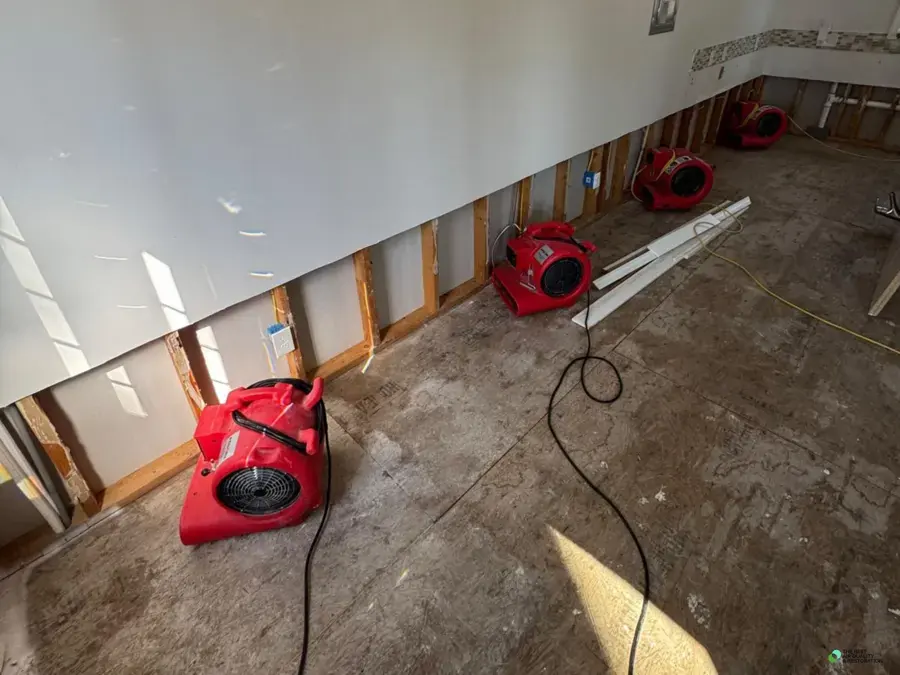
First steps for structural drying and dehumidification in Mount Airy
- 1
Keep the room closed
Close doors and windows in the wet area so the dehumidifiers can control the air.
- 2
Leave equipment running
Do not switch off air movers or dehumidifiers between visits, and keep cords away from water.
- 3
Lift items off wet floors
Keep furniture and boxes off wet carpet and wood so air can reach the surface.
- 4
Note the readings
Ask the tech for each day's moisture readings, and keep the log with the claim papers.
How structural drying and dehumidification is handled in Mount Airy
Hidden moisture keeps working on a house after the puddles are gone. Studs, subfloor and drywall soak it up and give it back slowly, so a room can feel dry to the hand while the wood inside is still wet.
Water that came through a floor above can leave the ceiling and wall cavity wet while the floor looks fine, which is why drying often covers more than the stain.
Before a single fan goes down, the tech who does the walkthrough takes readings in the wet room and the rooms around it, so the drying plan matches what is actually wet. The drying team pulls equipment on readings, not on how a wall looks.
What does structural drying and dehumidification cost in Mount Airy, MD?
Cost depends on the size of the wet area, the type of materials and the days of equipment. Dense floors and walls need extended monitoring.
One or two rooms
Finished lower level or floor
Class 4, hardwood or block
Ranges are typical, not a quote: category of water, square footage, material class and how fast drying started move the number most. Run the water damage cost calculator for a closer range.
The structural drying and dehumidification process, start to dry
- 1
Set equipment
Air movers and dehumidifiers go in by room, sized to the wet area.
- 2
Monitor daily
The tech reads moisture and adjusts positions at each visit.
- 3
Remove finished areas
Equipment comes out room by room as each area reaches its goal.
- 4
Document
Final readings and equipment logs are saved for the file.
How drying works
Fans move dry air over wet surfaces and pick up moisture, then the dehumidifiers condense it from the air and send it out as water so it cannot settle back in. Neither works well alone.
- Air movers are aimed along walls and under cabinets
- LGR dehumidifiers handle most clean water jobs
- Desiccant units and drying mats suit dense materials
Class, readings and equipment
The tech picks equipment from the volume of wet material and the depth of the moisture. Hardwood, plaster and block keep water far longer than carpet does, so they call for more units and extra days.
The tech takes readings at each visit and moves or removes equipment as areas reach their dry goal, so power is not wasted.
Thermal imaging and a pin meter work together, one mapping the area and the other confirming how wet the wood or drywall actually is.
When drying is finished
The finish line is a match with the dry reference from an untouched part of the house, never a surface that merely feels dry. Final readings and photos go into the file.
Equipment that stays too long costs money, and equipment removed too soon leaves moisture behind, so the readings decide.
Drying after a sewage or flood job is paired with cleaning first, as described under storm flood cleanup.
Trade fact: Closed doors and windows matter, because a dehumidifier works best in a sealed room where it can drain the air as the equipment runs.
Structural drying and dehumidification across Mount Airy and nearby towns
Drying crews cover ZIP 21771, including the Main Street historic district, Ridgeville, Parr's Ridge and the Carroll County and Frederick County portions of town.
The same service nearby: structural drying and dehumidification in Germantown, Gaithersburg, Rockville.
Related water damage services in Mount Airy
Structural Drying and Dehumidification questions in Mount Airy, MD
Why does drying take several days?
Water leaves wood, drywall and concrete at its own pace, so equipment helps the process along but cannot rush it beyond what the material allows.
How loud is drying equipment?
A steady hum from the fans and dehumidifiers means the equipment is running as intended, even if it is noticeable in the house.
Can the equipment be turned off at night?
It is best left running, since drying depends on constant airflow. If noise is a problem, the tech can adjust the number of units.
How does the tech know the structure is dry?
The tech compares wet area readings with a dry reference from an untouched room, and equipment stays until the two sets of numbers agree.
Can hardwood floors be dried?
Often yes, with drying mats or panels that pull moisture through the boards, if the damage is caught early and boards have not cupped severely.
Is drying needed after clean water extraction?
Yes. Extraction removes liquid, but wood and drywall stay wet, as covered under water extraction.
Still dealing with it?
Wet walls or floors after cleanup?
Finish the job with dry readings
Call and describe what was wet and for how long, and the crew plans the equipment and the readings.
(888) 535-8182Call about drying in Mount Airy