Structural Drying in Poolesville
Wet framing, subfloor and drywall do not dry on their own in a closed house. Poolesville crews place air movers and dehumidifiers, then recheck readings until the structure is back to normal.
(888) 535-8182Request structural drying in Poolesville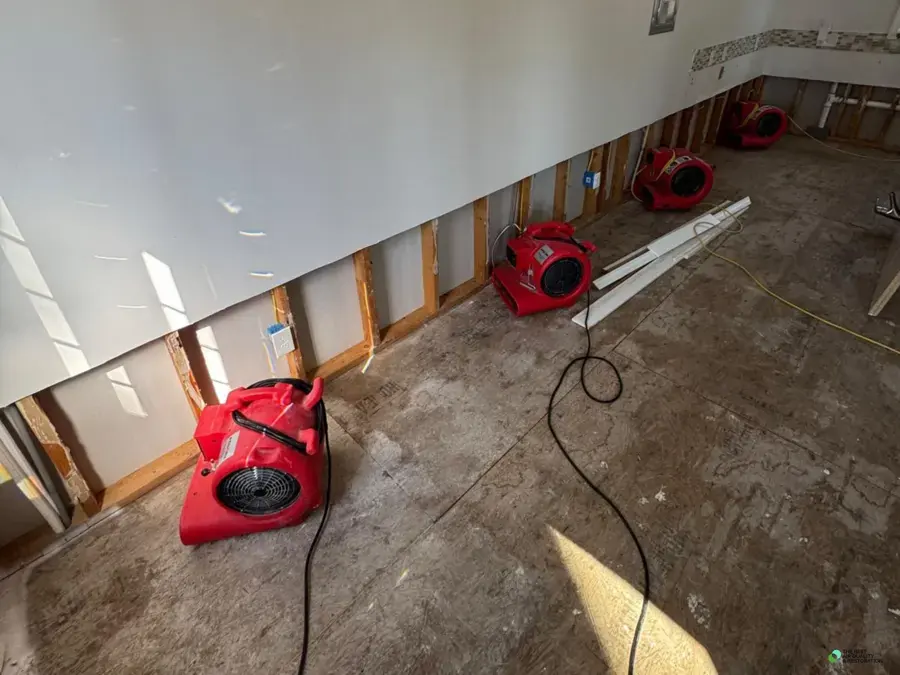
First steps for structural drying and dehumidification in Poolesville
- 1
Keep the house closed
Close windows and exterior doors in the drying area so the dehumidifiers work on the wet materials, not outdoor air.
- 2
Leave equipment running
Do not unplug or move the units overnight, since drying slows when equipment is interrupted.
- 3
Keep a steady temperature
Hold the thermostat steady so the air can carry moisture to the dehumidifiers.
- 4
Keep it clear
Leave cords, hoses and vents clear, and tell the crew about stains, odors or damp spots that appear.
How structural drying and dehumidification is handled in Poolesville
Drying a structure is closer to science than guesswork. Water moves into wood, drywall and subfloor, and the only way to know it has left is to measure. Equipment is placed from the readings and moved as they change.
Before a single fan goes down, the tech who does the walkthrough takes readings in the wet room and the rooms around it, so the drying plan matches what is actually wet. The drying team pulls equipment on readings, not on how a wall looks.
What does structural drying and dehumidification cost in Poolesville, MD?
Drying cost depends on how many rooms are wet, how deep the moisture sits and how many equipment days the readings call for.
One or two rooms
Finished basement or floor
Class 4, hardwood or block
Ranges are typical, not a quote: category of water, square footage, material class and how fast drying started move the number most. Run the water damage cost calculator for a closer range.
The structural drying and dehumidification process, start to dry
- 1
Map the moisture
Meters and a thermal camera mark every wet surface and set the starting readings.
- 2
Place the equipment
Air movers and dehumidifiers are sized and set for the wet area.
- 3
Monitor and adjust
Readings are retaken and units are moved as the wet area shrinks.
- 4
Confirm dry
Equipment is removed once readings match dry reference points.
The equipment and what it does
Air movers sweep dry air across wet surfaces to lift moisture, and dehumidifiers pull that moisture out of the air so it cannot settle somewhere else. Neither works well without the other, and both come after water extraction. Placement matters too: units are set to push air along walls and under cabinets, not just into the middle of a room.
- LGR dehumidifiers for most water damage jobs in occupied rooms
- Desiccant dehumidifiers for cold spaces and deep, stubborn moisture
- Drying mats and injection systems for hardwood, subfloor and wall cavities
- Heaters and temperature control to keep the air warm enough to hold moisture
Measuring progress
Each visit, the crew takes moisture readings in the same marked spots, along with temperature and humidity. A thermal camera shows cold, damp areas that a meter on the surface might miss, and equipment is moved as the wet area shrinks.
Dry reference readings from unaffected rooms set the target, since different materials dry to different levels. Equipment comes out only when the wet materials reach that target, not on a set schedule.
What helps the process
A closed house dries faster than an open one, so doors and windows stay shut while equipment runs. Occupants should keep the thermostat steady, leave the equipment plugged in and avoid moving fans or unplugging units overnight.
Drying equipment is loud and uses real electricity. It is a normal part of the job for several days, and the logged equipment days become part of the insurance record.
Trade fact: Drying too fast can crack hardwood and warp panels. The goal is controlled drying, with temperature and humidity set to the material, not the highest heat possible.
Structural drying and dehumidification across Poolesville and nearby towns
Structural drying runs in homes across Poolesville, ZIP 20837, including Ferry Crossing, Estates at Hartz Farm, Grace Cottages and the Woods of Tama.
The same service nearby: structural drying and dehumidification in Germantown, Gaithersburg, Herndon.
Water damage restoration in Poolesville · every town covered
Related water damage services in Poolesville
Structural Drying and Dehumidification questions in Poolesville, MD
How long does structural drying take?
It depends on the materials and how wet they got. Readings decide, and a thick hardwood floor or concrete block takes longer than drywall.
Why are dehumidifiers needed along with fans?
Fans move moisture off wet materials but leave it in the air. Dehumidifiers collect that moisture, so without them it settles into other walls and ceilings.
How is drying confirmed?
Moisture readings from the wet materials are compared with readings from similar dry materials in the same house. Matching numbers mean the drying is finished.
Can wet hardwood floors be saved?
Often, if drying starts quickly and uses mats or injection systems. Cupped or buckled boards that stay distorted after drying may need replacing.
Will the equipment run up the electric bill?
It uses real power, and the bill rises for the days it runs. Equipment days are logged, and the record helps when an insurer reviews the claim.
What happens before drying starts?
The water is extracted first and wet materials that cannot be saved are removed. See water extraction for that stage.
Still dealing with it?
Wet walls and floors after a leak?
Poolesville structures dried and verified
Describe what got wet and how long ago, and a crew will explain how the drying is planned and measured.
(888) 535-8182Send the drying details