Storm and Flash Flood Cleanup in Poolesville
Heavy rain and creek runoff can carry silt and contamination into garages and lower levels. Poolesville crews remove the water and mud, take out what cannot be cleaned and dry the structure.
(888) 535-8182Request flood cleanup in Poolesville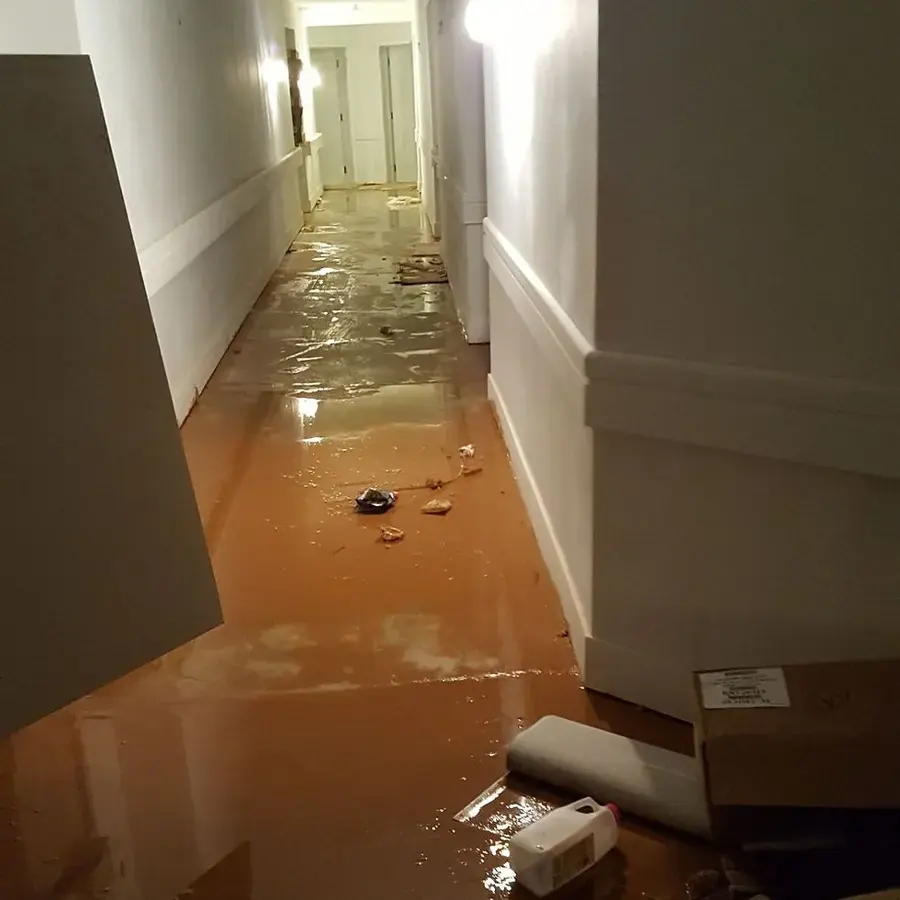
First steps for storm and flash flood cleanup in Poolesville
- 1
Stay out
Floodwater can hide electrical hazards, sharp debris and contamination. Keep out until power is off and the water level is safe.
- 2
Wear protection
If entry is necessary, wear boots, gloves and a mask, and wash skin that touches the water.
- 3
Document first
Photograph the water level and damage before any cleanup, and write down when the water came in.
- 4
Save only what is safe
Move dry valuables to higher ground, but discard food, medicines and anything porous that touched the water.
How storm and flash flood cleanup is handled in Poolesville
Seneca Creek spilled onto state route 28 southeast of Poolesville in December 1996 after a stretch of heavy rain, and Dry Seneca Creek is one of four watersheds in the town. Either way, flood water inside a house is handled as contaminated.
Before a single fan goes down, the tech who does the walkthrough takes readings in the wet room and the rooms around it, so the drying plan matches what is actually wet. The drying team pulls equipment on readings, not on how a wall looks.
What does storm and flash flood cleanup cost in Poolesville, MD?
Garages and unfinished levels are the lower range, since concrete cleans well. Finished lower levels cost more because carpet and drywall come out, and deep or long flooding sits at the top.
Garage or unfinished level
Finished lower level
Deep or long flooding
Ranges are typical, not a quote: category of water, square footage, material class and how fast drying started move the number most. Run the water damage cost calculator for a closer range.
The storm and flash flood cleanup process, start to dry
- 1
Extract
Flood water is pumped and extracted from every affected area.
- 2
Remove silt and debris
Mud is shoveled out and ruined materials are hauled away.
- 3
Clean and treat
Surfaces that stay are washed and treated with antimicrobial.
- 4
Dry deep
Desiccant or LGR dehumidifiers and air movers dry framing and floors.
Why flood water is different
Water that has crossed yards, roads and soil collects bacteria, fuel, fertilizer and sewage. It is classed as contaminated, so porous materials it touched are removed instead of dried, and crews work in protective gear.
- Carpet, pad, insulation and lower drywall come out, because they hold contaminated water
- Concrete, block and framing are cleaned and treated with an antimicrobial before drying
- Mud and silt are shoveled and vacuumed out of garages, stairwells and corners
- Contents are sorted into what can be cleaned, what is lost and what needs a specialist
Where the water goes
Garages, utility rooms and lower levels take the water first, and anything stored on the floor is at risk. Silt settles into carpet, under baseboards and into wall bottoms, and it dries into a crust that holds moisture and odor.
Extraction runs first, often with submersible pumps for deeper water, followed by a wash down of surfaces that stay. Desiccant or LGR dehumidifiers then handle the cool, damp air that follows a long wet spell.
Documenting a flood loss
Flood losses get scrutiny from insurers. Dated photos of the water level, a list of discarded contents and the moisture log from drying support the file, and a standard homeowners policy often excludes flood, so coverage should be confirmed early.
Cleanup, debris hauling and rebuilding are separate stages. Drying ends when readings are normal, and finish work such as new drywall and flooring comes after that.
Trade fact: Flood water is judged by where it has been, not by how it looks. Water that seems clear after crossing a yard or road is still treated as contaminated.
Storm and flash flood cleanup across Poolesville and nearby towns
Storm flood calls come from across Poolesville, ZIP 20837, including homes in the Dry Seneca Creek, Horsepen Branch, Broad Run and Russell Branch watersheds and the Woods of Tama.
The same service nearby: storm and flash flood cleanup in Germantown, Gaithersburg, Herndon.
Water damage restoration in Poolesville · every town covered
Related water damage services in Poolesville
Storm and Flash Flood Cleanup questions in Poolesville, MD
Is flood water ever clean?
Not once it has crossed ground. Even rain runoff from a yard collects bacteria and chemicals, so flood water is handled as contaminated.
Can wet carpet be saved after a flood?
Rarely. Carpet and pad that sat in flood water are normally discarded, since the contamination goes deep into the fibers and backing.
Which creeks matter for flooding here?
Four watersheds make up Poolesville: Russell Branch, Dry Seneca Creek, Broad Run and Horsepen Branch. Heavy rain runoff drains toward them, and low ground nearby can take on water.
How long does flood cleanup take?
Extraction and removal come first and move quickly, while drying runs until readings are normal. Contaminated materials add work, so the job usually takes longer than a clean leak of the same size.
Does insurance cover flood damage?
Flood is commonly excluded from homeowners policies, though water backup endorsements and separate flood coverage can help. The insurer should be asked early.
What if sewage mixed with the flood water?
Then it is a sewage job as well. The sewage backup cleanup page explains the extra containment and removal involved.
Still dealing with it?
Flood water in the house?
Poolesville storm damage cleaned and dried
Share where the water entered and what it covered, and a crew will explain how contaminated water is handled.
(888) 535-8182Send the flood details